Garden

The Orchid Whisperer

Friday, July 27th, 2012

Wanna know something?  When it comes to indoor plants, I’ve never met an orchid I couldn’t kill.  It isn’t for lack of wanting to keep an orchid alive or an affection for the species.  In fact, I like to buy orchids from time to time and display them in my home, but truth is, I lack both the talent and patience to successfully care for them.  Yes that’s me, I fully admit I am an Orchid Killer.  I should start a new series called “things I suck at” because let me tell you “orchid grower” is super high on that list.

As we all know, orchids are so pretty displayed indoors – some designers label the mass produced Phalaenopsis as “ubiquitous” but I think all varieties are beautiful.  We acquired a few orchids earlier this year, and as with the two dozen other orchids I’ve ever purchased and owned over the course of my life, they look pretty for two weeks, the blooms fall off, and then the stem turns wooden and petrified, death results, and that’s the end of the story.

So here’s how things changed in our house and someone (not me) became The Orchid Whisperer.

Matt was on a real estate inspection a few months ago, and the woman who lived in the home he was appraising had an impressive collection of orchids that had rebloomed year after year.  Knowing his wife to be a notorious Orchid Killer, he inquired how he might take it upon himself to learn a few tricks – perhaps spare the lives of a few of the species – and asked this knowledgeable woman what really was the secret formula for orchids that rebloom?  And she spilled it.

So we he tested out these key pieces of advice over the course of the last few months, and hey guess what, they worked.

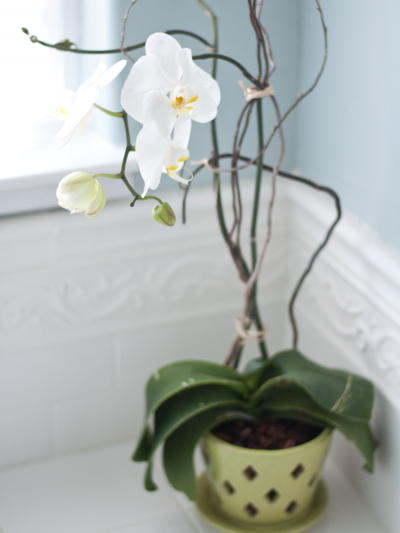
Exhibit A:  I brought home a moth Phalaenopsis orchid pictured here at my kids’ public school auction (mixed with curly willow) way back in early March and after the blooms fell off, I pretty much ignored it.  It sat there dormant, but Matt followed all the tips suggested, and look at it now, five months later.


Read the rest of this entry »

Pin It
Google BookmarksBookmark/FavoritesStumbleUponShare

DIY Potting Bench

Monday, July 23rd, 2012

At last at last at last, I finally have a potting bench to call my own!  Last weekend, my mister agreed to spend a day building this for the corner of our yard since I’ve been nudging him for a few years now.  On Saturday, we built ourselves a 6 foot long potting bench that now sits in a shady spot in our side yard.  Finally, a place for me to do all my gardening – I’m so crazy excited about this new handmade bench!  

diy potting bench centsational girl


We used the tutorial for this potting bench I found over at Better Homes & Gardens as our guide, but we made a few modifications.  I won’t repeat all the instructions, they’re pretty detailed if you follow the link, but our three changes are listed below.


Read the rest of this entry »

Pin It
Google BookmarksBookmark/FavoritesStumbleUponShare

Summer Garden Tour

Thursday, July 5th, 2012

Do holidays in the middle of the week make you feel strange?  They do for me.  It’s weird but wonderful waking up late in the morning in the middle of the week, then puttering around the house, doing all those little things you don’t have time for during the hustle and bustle of an ordinary workweek.

I was wandering around the yard yesterday in the late afternoon, glass of sauvignon blanc in one hand, camera in the other, as the sun set over the back hill.  The children also we’re running around the yard, picking strawberries before they’re ripe,  discovering lizards and spiders, and noticing other mini magical moments in nature, it was a blissful afternoon. 

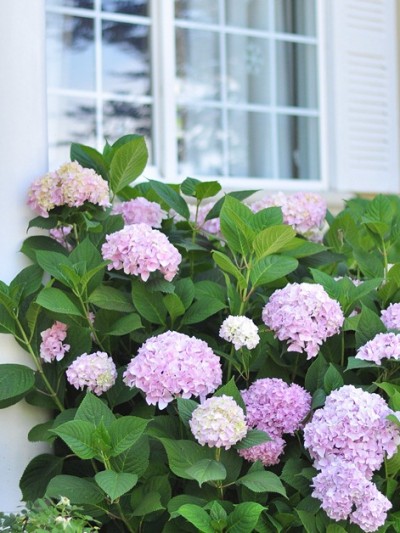
As I wandered I listened to the comfortable repetition of the “snip, snip, snip” as Matt pruned back hedges and pulled unwanted suckers.  I appreciated the new growth around every turn, blooms and buds and fruit that didn’t exist just a few weeks ago.  Here’s a tour of what’s growing in our yard this month, it amazes me year after year. 

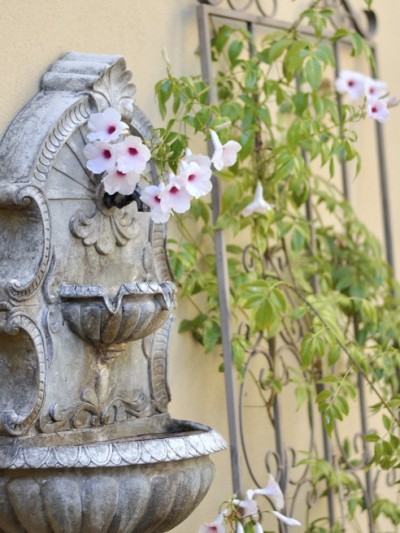
Bower vine is blooming in the courtyard and creeping up an old iron trellis.  It lingers over our broken fountain that still needs a new pump, but I think its aged finish is a beautiful focal point, functioning or not. 

bower vine on wall fountain


Read the rest of this entry »

Google BookmarksBookmark/FavoritesStumbleUponShare

Grafting Pinot Noir

Thursday, June 14th, 2012

A fascinating thing happened in our backyard last week – at least it was fascinating for us.  Matt and I have a hobby vineyard on our back hill that we’ve mentioned before – those 100 vines can produce up to 25 cases of wine.  We’ve experienced two unfortunate harvest years in a row so we decided to make a change to the varietal of wine that we grow.  Here’s why.       

The sugar content of grapes determine their ripeness and it is the key component that influences the future wine.  Weather is the primary factor in growing grapes, we always hope for wet winters, hot summer days with cool evenings, and a dry fall before the grapes are harvested.  For the last two years, we’ve been unable to get the Petite Syrah’s sugar levels high enough to make wine because the varietal doesn’t ripen until late October.  We’ve also been savaged by critters who raid the fruit in October as a source of food, recalled by Matt’s woeful harvest story of 2010.  

After consulting with local experts and winemakers, we came to the conclusion we’d be better off if those 100 vines were Pinot Noir grapes (most commonly grown in our terroir) and not the Petite Syrah we planted twelve years ago because they ripen an entire month earlier, and are also the most commonly grown grape within 25 miles. 

So what’s a winemaker to do to solve this agricultural dilemma?  It’s a process called grafting, and it’s an old technique that allows us to change the variety of the grapes without the expense of replanting, and a loss of only one year’s crop.  Grafting only costs $1 per plant (plus labor) and at such an affordable rate, it was worth the process.  It takes someone with knowledge to do it, so we hired Miguel with his 12 years of grafting experience who came highly recommended.     

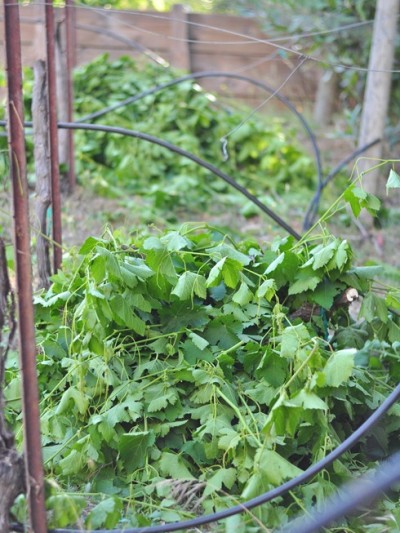
The first step was hard to take, he cut down all our green grapevine leaves within an hour leaving big piles of beautiful branches down the rows and across the yard, and then cut the trunks down to 3’ tall, leaving the scene feeling rather naked, for lack of a better word.

trim all vines


The next step was the actual grafting process which requires what’s called “scion” wood, that comes from the mother Pinot Noir canes that are collected for this purpose the season before.  We’ve been planning this transformation since our disappointing lack of a harvest last fall, so we planned ahead with a winemaker we consult with every year during the crush, and secured some healthy Pinot Noir stems which were kept in cold storage for many months in anticipation of grafting.     

Scion canes are dormant branches that are kept in cold refrigeration after they’re cut in winter.  Each piece of scion wood provides several buds for grafting, here’s a look at one used by Miguel – he looks for the buds that will successfully become new branches.

pinot noir scion cane


All canes are kept moist in a carpenter’s box as the grafter moves from vine to vine grafting the new variety. 

keep vines moist in carpenter box


Here is how this is done up close.  First he trims back the bark in the section where the vine will be grafted. 

strip bark


Read the rest of this entry »

Related Posts with Thumbnails
Google BookmarksBookmark/FavoritesStumbleUponShare